

 |
|
|
|||||||||||||||||||||||||||||||||||||||||||||||||||||||||||||||||||
Our Pages
ABOUT CONSTITUTIONAL MEDICINE
|
The table below shows how variable hives and its triggers can be but note that many people have their hives triggered by some other event that is not covered here.
Unless the hives are just a one-off reaction to some drug or unusual environmental trigger, the first place you need to start with if the hives are happening more than once is the overall condition of the immune system. The immune system is exactly like having an active army inside the borders of your own body. You need that army to repel invaders from the outside, such as viruses, and likewise to deal with dangerous elements on the inside, such as toxins or mutated cells. However, if the immune system starts attacking harmless substances or reacting against your own tissues then you can get such things as hives.
If the immune system is out of balance, then begin by looking at the key factors that provide rhythm and stability in our health -- especially the diet and the work/life balance. Your answers to the following questions may show where the attention needs to go: 1) do I eat a healthy diet and would score myself at least 7 out of 10 for good nutrition? 2) do I have signs of food intolerance such as a bloated belly and dark rings under my eyes?
What can happen is that there can be an ongoing food intolerance, wheat, eggs or dairy products being the most common causes of this, that is putting the immune system into a constant state of hyper-vigilance with the potential to become over-reactive to something that then triggers off the hives. Food allergy and intolerance is an important subject that needs a careful approach. If you need to explore this area further then start here
Stress is a big subject, and there are several articles on this site that delve into different aspects of it, I suggest you look further at the conditions A-Z to see which section speaks to you the most but, for at least one example, there is a detailed article on anxiety and tension that has a number of practical tools to help, and it's found here
However much you can, to achieve a cure, you must deal with what you best understand to be causing the hives. That said, if you are being tormented by hives right now then here are some tried and true methods to get some more immediate relief.
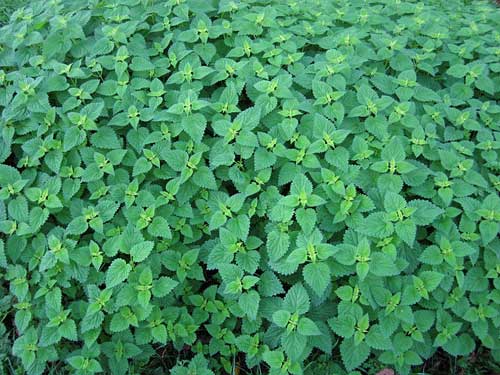
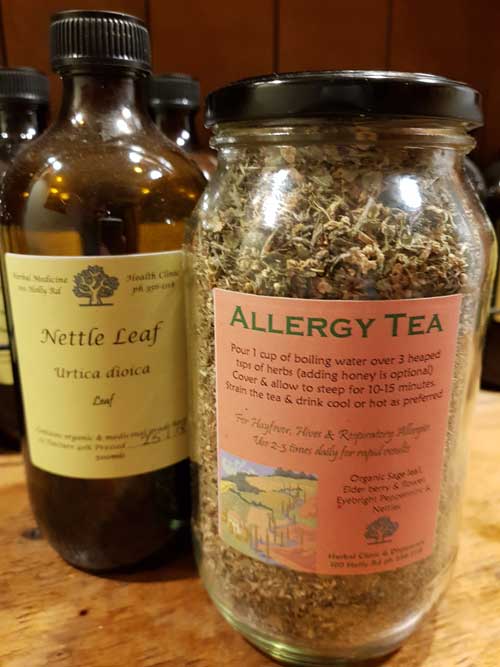
So, why in the world would something that can cause hives and is even part of the medical name for hives be able to help them? Well, once the Nettles are dried, they lose the ability to sting or cause a problem whereupon they gain the ability to, in most cases, be able to settle an allergic and over-reactive immune system. Nettles have frequently been seen to work with helping with chronic hives however, reasonably substantial doses can be required, and this is where the tea of Nettles may be preferred. For example, we make and use an 'allergy tea' that centres on Nettle leaf, the formula is written up below, that will give an indicator to how much may be needed to work.
The dose is 3 full teaspoons into one large cup of freshly boiled water. You cover the cup and let it sit for 10 minutes before straining it off (you could use a tea-pot or coffee plunger etc. to do the infusion). It is perfectly ok to add honey and to drink it hot or cold according to your preference. The allergy-tea has been seen to work well for hives, but it may take two or three days of making and drinking a cup three times a day to start seeing an obvious result. When things have clearly improved, it is ok to drop the dose back to once or twice a day and then simply stop using it when it isn't needed further.
We must treat any kind of chronic hives from the inside-out in to treat the cause and achieve a cure but, that said, it can still be important to find a way to relieve the symptoms when the skin is flaring up. In my own practice, I usually just recommend cold compresses. Water that has been cooled in the fridge or water that has had ice cubes added to it, a cloth soaked in this cold water is then applied to the affected areas for as long as it takes to draw some heat out of the skin, then repeat with a fresh cloth soaked in the cold water for as long as it takes that one to warm to skin temperature (usually a lot longer than the first time). This simple, natural way to reduce inflammation takes a little time and effort but it works immediately and is a lot better than taking steroids to try to cool down (meaning suppress) the whole immune system from within. The same approach of making a cool or cold compress can also be tried with certain herbs that have been seen to help in severe hives.
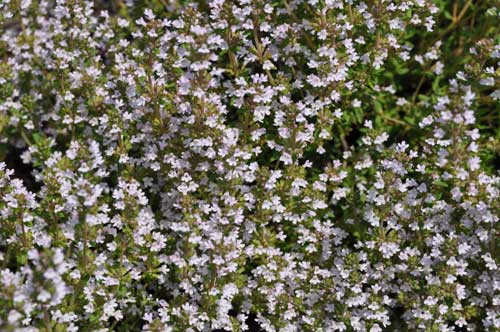
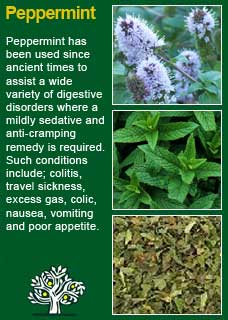
There are two easily obtained herbs that can be recommended to use as an external preparation to relieve the hives; they are Thyme and/or Peppermint. The method of preparation and application is the same for both herbs. Depending on how large the area of skin it is you need to treat and how often you need to repeat the treatment within a 24 hour period, either take 15 grams for 1 litre, or 30 grams for 2 litres (i.e. half an ounce to one ounce of herb) of either one of the herbs or a combination of the two and place in a jar, preferably glass. Pour over one to two litres of freshly boiled water and then make sure to cover the jar straight away because both herbs contain precious volatile oils that will quickly evaporate into steam but, so long as the jar is covered, will turn back into liquid and be available from the tea where you can get their anti-itching and anti-inflammatory benefits to your skin by applying them in the form of a compress, Allow the liquid to cool to room temperature, in other words it will need to sit on a benchtop somewhere for several hours. Then strain off the liquid into another receptacle and this infusion will be ready to use and will keep fresh for at least 24 hours. Apply to your skin by dipping a cloth into the infusion, lightly squeezing it so it remains 'wringing-wet' and then laying if over the areas of your skin that are most affected for at least 5-10 minutes or until the cloth has somewhat dried out. If the hives are especially 'hot' then it may be helpful to firstly place the infusion into a refrigerator or to add some ice-cubes so as to make it into a 'cold' compress. Such an application can draw out a great deal of heat from the skin. You will need much more of these herbs that you would get from a little box of them at the supermarket but, as they are such commonly used plants around the world, you should be able to find a bulk-supplier where they will be cheap and plentiful. So long as it is clearly helping you then you can safely repeat this treatment as often as required.
Finally, you might benefit from learning about your constitution to know what kind of foods, herbs, exercises etc. will work especially well for your health in general. Constitutional health is an old and fascinating way of understanding our differences. There's a brief introduction here and a more detailed section on working out which constitution you are here
Please understand that I cannot personally advise you without seeing you in my clinic. |
|


 TOP
TOP



|


© 2011 R.J.Whelan Ltd