

 |
|
|
|||
Our Pages
ABOUT CONSTITUTIONAL MEDICINE
|
What is it?
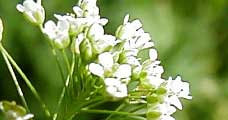
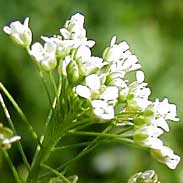
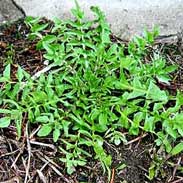
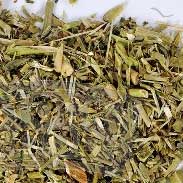
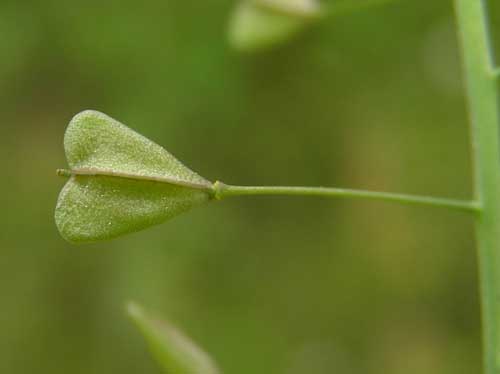
Shepherd’s Purse is thought to have originated from Southern Europe and now grows all over the world. It is a small plant with a circlet of leaves close to the ground above its long tapering root. The leaves send up a slender stem that can grow up to half a meter high which then produce the characteristically shaped fruits which give the plant its name.
Shepherd’s Purse was widely used as a first aid treatment pre the industrial age. It grows close to wherever people live so it would have been near to hand when needed. Shepherd’s Purse leaves, scrunched up into a wad, can be used to quickly help staunch bleeding. On unbroken skin but where there is a bad bruise or internal trauma Shepherd’s Purse was made into a poultice by mashing the leaves, mixing with some hot water, and then being applied over the affected area with a wrapping to keep it on for a few hours. In modern times Shepherd’s Purse is mostly used for women who are experiencing excessively heavy menstruation caused by problems such as fibroids or endometriosis. Andrew Chevallier writes that 'Shepherd's Purse is 'one the best remedies for preventing or arresting haemorrhage. Shepherd's Purse has long been a specific treatment for heavy uterine bleeding. While weaker acting in this respect that ergot, Shepherd's Purse has none of ergot's toxicity and is better tolerated by the body. It may be used for bleeding of all kinds - from nosebleeds to blood in the urine. An astringent herb, it disinfects the urinary tract in cases of cystitis and is taken for diarrhoea' King's Dispensatory writes 'Shepherd's purse possesses stimulating, astringent, and diuretic properties. In urinary derangements of renal or cystic origin, and in haematuria, an infusion, and especially a tincture of the herb, will be found very efficient. It is a remedy for chronic menorrhagia, with too frequent and too long continued or constant, but almost colourless, flow. Associated with this condition is a frequent urging to urinate, and a deposit of phosphates. Atonic dyspepsia and chronic diarrhoea have been successfully treated with it. In bleeding piles, diarrhoea, and dysentery, it has been found beneficial. The fresh herb, bruised and applied locally, has been effectual in ecchymosis (discolouration of the skin), the result of blows, bruises, etc., and has been of service in rheumatic pains' The British Herbal Pharmacopoeia (BHP) describes Shepherd's Purse's actions as anti-haemorrhagic & urinary antiseptic and says it is indicated for menorrhagia, haematemesis (vomiting of blood), haematuria (blood in the urine), diarrhoea and acute catarrhal cystitis and specifically indicated for uterine haemorrhage. The BHP suggests a dose of 1-4 gms or by infusion or a dose of 1-4mls of the ethanolic extract (a well rounded tsp is approx 1.5 grams)
~ Whilst there are no clinical trials with Shepherd’s Purse (it is rather difficult to simulate injuries and excessive bleeding in an experimental model!) there have been some interesting glimpses into some of the ways in which it might work through laboratory studies which have indicated that Shepherd’s Purse possesses anti-inflammatory, diuretic and contractile effects on smooth muscle. ~ The authors, titles and the 'where-and-when' published of over 20 further studies and articles on Shepherd's Purse are listed in a PDF found here
For some years now, against this proven and safe way of herbalism, there has been a rising tide of excessive caution and scare-mongering in many parts of the world. The same authorities that, not so long ago, decried herbal medicines as ineffectual, have now taken up a different adversarial position; that they are dangerous substances that should only be prescribed by Doctors, who of course have zero training in them. Unfortunately, the same unnecessary fear and worry has crept into many natural health websites and popular publications on herbs. Herbs that we have safely used for thousands of years, that have no reports of adverse reactions in the medical literature despite widespread use by millions of people, are suddenly described as contraindicated because of something that should have been seen as completely unimportant, or at the utmost a merely theoretical concern, such as a laboratory study on one of the herb's constituents to use an all too common example. I wonder sometimes if the writers of such articles feel that the herb will be more deserving of respect if it is thought to be a little bit dangerous, in other words more like a drug than something that has simply come out of the earth and been used by ordinary people for generations beyond count. There is just so much misinformation about herbal medicine on the internet now. Ludicrous claims and cautions abound in equal measure; it seems like one group are trying to make money out of the public whilst the other are busily trying to scare them off. I have to believe that the kind of reader who takes the time to read pages on herbs that are as extensive as this one is much less likely to be swayed by marketers or misinformers. I hope that you will keep your wits about you if you get conflicting opinions from people who have never really got to know these herbs, who have never worked with them, or learned how to use them safely and effectively. I want to remind you that the reason that herbs can never be patented and owned by any individual or corporation is because they are, and always will be, the People's medicine. They belong to all of us and it is my great hope in sharing this work that you will learn how to use them wisely for yourself, and the people you care for. Be safe, but do not be afraid.
Shepherd’s Purse is a great herb to get to know first-hand to understand how it works. If you who are reading this are studying herbal medicine or just have your own reasons to need to know this plant ally at a much deeper level then take some Shepherd’s purse with a quiet, receptive and attentive mind and feel for yourself how extraordinarily ‘binding’ an action it holds. This is immediately obvious in the mouth when you taste it, but if you can get past that slight unpleasantness and you are open to it then I think you will be able to feel the same action, or energy, of Shepherd’s Purse moving throughout the body, almost as if it is searching out for where there is a weakness in the system! Most of my clinical experience using Shepherd’s purse has been in the treatment of excess menstrual bleeding and in this regard I have found it to be such a potent remedy that I would start by saying it is unwise to use Shepherd’s purse at the very beginning of the period, even if very heavy, because it may be anticipated that it will considerably 'bind the bleeding' and of course there is a necessity for the body to fulfil its natural process. Rather I suggest waiting for 1-2 days before starting Shepherd’s Purse for excessively heavy periods.
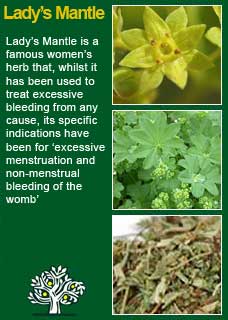
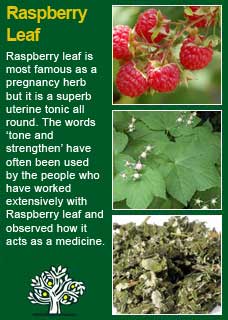
With the tincture The method to get Shepherd’s purse to work for this is to take it in small and frequent doses, until the bleeding has slowed down or stopped. Mainly depending on the strength of the tincture 20 drops or 1 ml of Shepherd’s purse each time is usually enough but this can be doubled to 40 drops or 2 mls if necessary. I often use the Shepherd's purse at the same time as Lady's Mantle and may also combine some Raspberry leaf at the same time. For a combination of Shepherd's purse with Lady's Mantle and/or Raspberry leaf I recommend between 2-4 mls depending on the size and sensitivity of the patient With the tea Make a strong tea by adding 2 large cups of freshly boiled water (approximately 1 litre) to 3-4 heaped tsps of Shepherd's Purse dried herb (this would be about 5 or 6 grams of herb). Cover and allow the tea to steep for a good 15 minutes. Strain and allow to cool before drinking. The equivalent dose to 1 ml of the tincture will be between 50-100mls of the tea depending on the strength and freshness of the dried herb. It is very strong tasting but once it is seen to work the unpleasantness will likely seem insignificant. Dosage notes It is not correct that 'more is better' with herbal medicine and in fact often it is the reverse that 'less is more!' You have to spend time with herbs to understand them; they are much more a living medicine than are drugs. The first step is to feel them working, the second step is to get a sense of how often you need to use them and in what dose. As soon as the treatment is obviously working you can stop it but, if necessary, you can take a dose every 1-2 hours -- up to 6 doses in a day. If you don't feel anything happening by the 2nd or 3rd dose, then try taking the herbs at the higher end of the suggested dose range. They may be hard to take but they will not cause toxicity. Many women feel this treatment working almost straight away but because it is not exactly a pleasant process it is tempting to stop the treatment too soon. Listen to your body to know what to do and how long to keep it up for. Each extra time you take a dose you increase the strength of the effect.
i have seen how Shepherd's Purse may help a nose bleed that has not responded to just about any other form of treatment. The best technique here is to use some Shepherd's Purse tea (2-3 tsps in a half a cup of boiling water covered and steeped for 10-15 minutes). Soak some cotton balls into the tea, squeeze out the excess liquid and insert into the nostrils to stop the blood vessels from continuing to haemorrhage.
Many women experience problems with significant bleeding after child-birth. Shepherd's Purse can be exceptionally effective at helping to stop the excess bleeding and re-tone the uterus, but it is a strong treatment! The best way to use the Shepherd's Purse in this case may be to make a tea by adding 1 litre of freshly boiled water to a good 4 tsps of the dried herb. Cover and allow to steep for 15 minutes. Strain and allow to cool completely. Drinking the entire tea over the period of a day in divided doses should have fast effects. The treatment can be repeated on the second day and likewise on the third. It is rare to still need it after 2 or 3 days.
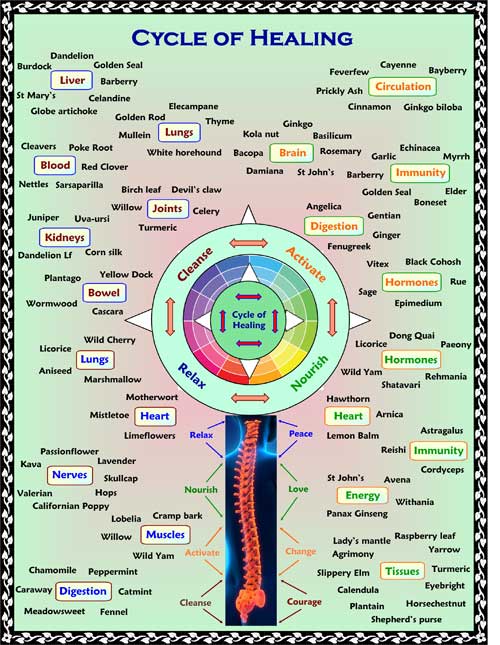
Much of the information here about the traditional uses of Shepherd's purse is consistent with the model of thinking whereby one may treat problem A with plant B. There is value in this approach, especially in how it helps us pass on useful knowledge to one another, but it falls short in one vital area; and that is that people are not all cut from the same cloth! Something that works brilliantly for one person may do less for another --why is this? Part of the reason is that people vary in their constitutions as to whether they are either hotter or cooler and, at the same time, either dryer or damper. This useful and rather fascinating subject is introduced further here Another big part of using the right herb when it is most needed comes from understanding the need to treat what is going wrong for the person that had led up to their getting a health condition. In this light, Shepherd's purse can particularly offer its benefits when a nourishing action is needed in the 'cycle of healing', more about this here
Please understand that I cannot advise you, including on products or dosage, without seeing you in person in my clinic but for ideas
on how you might find a good herbalist in your area read here |
|


 TOP
TOP

|


© 2011 R.J.Whelan Ltd